What are the steps involved in Pcb assembly companies?
steps involved in Pcb assembly companies
In the intricate world of electronics manufacturing, PCB (Printed Circuit Board) assembly is a crucial process. It involves the intricate task of assembling electronic components onto a PCB to create functional electronic circuits. The efficiency and precision of this process are paramount in ensuring the quality and reliability of the final product. PCB assembly companies employ a series of meticulous steps to accomplish this task, each playing a vital role in the overall process.
The first step in PCB assembly is the procurement of components. This involves sourcing all the necessary electronic components required for the specific PCB design. Components can range from resistors and capacitors to integrated circuits and connectors. PCB assembly companies must ensure that they source high-quality components from reliable suppliers to maintain the integrity of the final product.
Once the components are procured, the next step is pcb assembly companies fabrication. This involves manufacturing the actual PCB according to the design specifications provided. PCB fabrication typically involves processes such as etching, drilling, and solder masking to create the intricate circuitry required for the electronic device. Advanced machinery and technology are employed during this phase to ensure precision and accuracy.
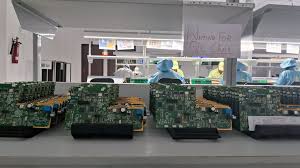
What are the steps involved in Pcb assembly companies?
With the fabricated PCBs ready, the assembly process can commence. This step involves placing the electronic components onto the PCB according to the design layout. Automated pick-and-place machines are often used to precisely position components onto the PCB, significantly improving efficiency and accuracy. Alternatively, manual assembly may be employed for specialized or low-volume production runs.
After the components are placed on the PCB, the next crucial step is soldering. Soldering is the process of permanently joining the components to the PCB using solder, a metal alloy with a low melting point. This step requires precision and expertise to ensure proper connections and avoid solder bridges or cold joints, which can lead to malfunctioning circuits or reliability issues.
Quality control is integrated throughout the entire PCB assembly process. Inspection and testing are conducted at various stages to identify and rectify any defects or inconsistencies. Automated optical inspection (AOI) and X-ray inspection are commonly used techniques to detect defects such as misaligned components, soldering issues, or PCB damage.
Once the PCB assembly is complete and thoroughly inspected, the final step is functional testing. This involves powering up the assembled PCB and testing its functionality to ensure that it performs as intended. Functional testing may involve running diagnostic tests, performing simulations, or subjecting the PCB to real-world operating conditions.
In addition to these primary steps, PCB assembly companies also handle secondary processes such as conformal coating, encapsulation, and packaging, depending on the specific requirements of the electronic device. Conformal coating provides protection against environmental factors such as moisture and dust, while encapsulation involves sealing the PCB in a protective casing for added durability.
In conclusion, PCB assembly is a complex and multi-faceted process that requires precision, expertise, and attention to detail. From component procurement to functional testing, each step plays a crucial role in ensuring the quality and reliability of the final product. PCB assembly companies leverage advanced technology and rigorous quality control measures to deliver high-performance electronic circuits for a wide range of applications.