One man is an Island
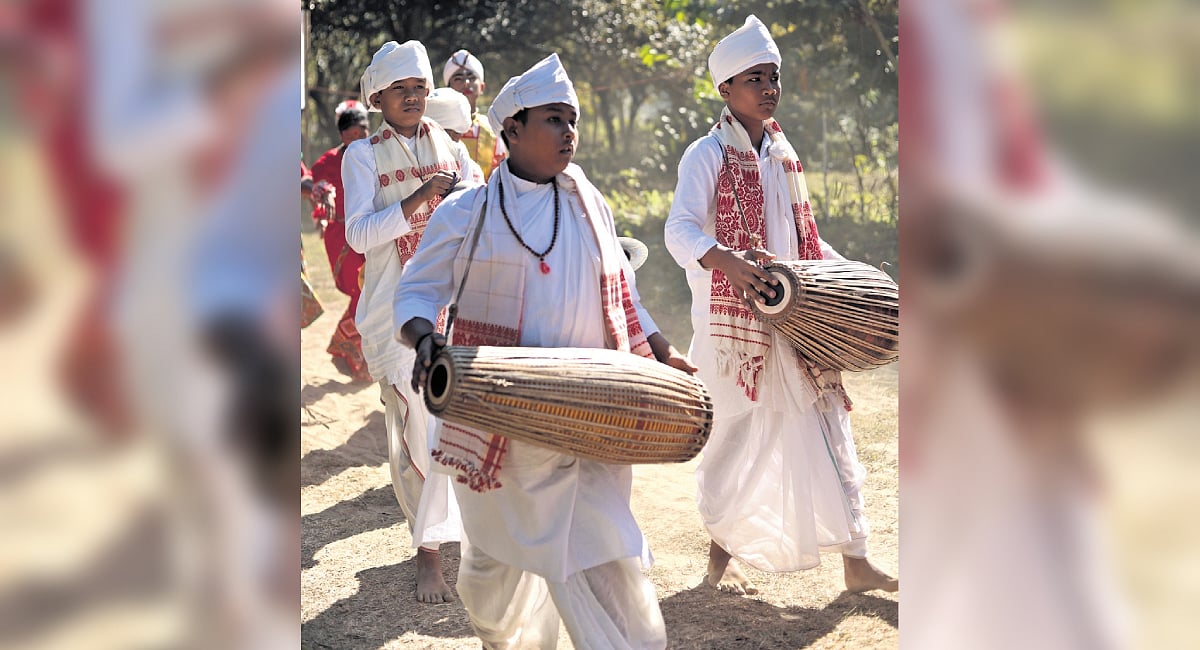
Majuli has been screaming for attention. It is the world’s largest inhabited river island and a melting pot of Assam’s neo-Vaishnavite, and indigenous tribal cultures, and famous for its 22 satras (monastic centres) introduced in the 15th century.
Ravaged by floods annually, and washed away by bits and pieces, the island which used to be spread over 1,250 sqkm before 1950, now barely spans 483 sqkm. Experts warn that in the next two to three decades, Majuli may vanish from the world map entirely. The island has been seeking UNESCO World Heritage status tag for over a decade now, but without success.
In 2002, a local festival in Majuli sparked a vision in Mukul Doley, a young music enthusiast from Majuli’s Jengraimukh area. That early inspiration grew into what is now the Majuli Music Festival.
Doley, now 39, left his corporate job in Mumbai to bring this vision to life, dedicating himself to his community through the festival, which has been held annually since 2019. “That mahotsav in my village gave me the idea to revamp the concept of a festival,” says Doley, who has been managing the festival with his wife and co-founder, Momee Pegu.
The festival, now in its fifth year, has not only become one of Assam’s most anticipated indie events, but is also a hub for cultural and environmental awareness. The aim is to promote rural tourism, support the local economy, and highlight local talents. Since the first edition, the festival has grown quickly, hosting artists like Lucky Ali, Kailash Kher, and Sona Mohapatra.
Majuli’s indigenous culture is rich in traditions, and the festival is designed to showcase this heritage through themed stages, local performances, and traditional art forms. This year the festival, from November 22 to 24, will feature two stages: the Cultural Stage and the Night Stage.
In the past, the festival has featured traditional art forms, workshops, and local crafts, offering attendees an immersive experience. “We want people to come to Majuli and experience the rich tradition that it has to offer. It is only then that they’ll realise if this island ceases to exist, none of these traditions and cultures will remain,” says Doley.