How do printed circuit board assembly manufacturer differ from traditional rigid PCBs?
printed circuit board
Printed circuit board assembly (PCBA) manufacturers have evolved significantly from traditional rigid PCBs to meet the growing demands of modern electronics. While traditional rigid PCBs serve as the backbone of electronic devices, advancements in technology and manufacturing processes have led to the emergence of new types of PCB assemblies that offer increased flexibility, functionality, and versatility.
One of the primary differences between traditional rigid printed circuit board assembly manufacturer and modern PCBA lies in their physical structure and flexibility. Traditional rigid PCBs are typically composed of a rigid substrate, such as fiberglass-reinforced epoxy, that provides mechanical support and stability. In contrast, PCBA encompasses a broader range of substrates, including flexible materials like polyimide or polyester, that allow for bending, twisting, and conforming to irregular shapes. This flexibility enables the creation of compact and lightweight electronic devices with unconventional form factors and improved ergonomics.
Moreover, traditional rigid PCBs are limited in terms of design flexibility and scalability. The rigid nature of these boards restricts their adaptability to complex geometries and innovative designs. In contrast, PCBA manufacturers can leverage flexible substrates and additive manufacturing techniques to create intricate and customizable assemblies that meet the specific requirements of diverse applications. This flexibility in design enables the integration of sensors, actuators, and other components into foldable or wearable electronic devices, opening up new possibilities for product innovation and differentiation.
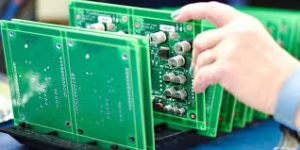
How do printed circuit board assembly manufacturer differ from traditional rigid PCBs?
Another key difference lies in the assembly processes and techniques used in traditional rigid PCB manufacturing versus PCBA. Traditional rigid PCB assembly typically involves surface mount technology (SMT) or through-hole assembly methods, where components are mounted onto rigid substrates using soldering techniques. In contrast, PCBA encompasses a broader range of assembly techniques, including flexible circuit assembly, hybrid integration, and additive manufacturing. These advanced assembly methods enable the integration of components onto flexible substrates, allowing for seamless integration of sensors, antennas, and other electronic elements into flexible assemblies.
Furthermore, traditional rigid PCBs are often limited in terms of their resistance to mechanical stress, shock, and vibration. The rigid nature of these boards makes them susceptible to damage or failure when subjected to external forces or environmental conditions. In contrast, PCBA manufacturers can design assemblies with improved durability and reliability by leveraging flexible substrates and encapsulation techniques. Flexible substrates can withstand bending, twisting, and flexing without compromising electrical performance, while encapsulation materials provide protection against moisture, dust, and mechanical damage.
Additionally, traditional rigid PCBs are typically designed for specific applications and may require additional components or modules to achieve desired functionality. In contrast, PCBA manufacturers can integrate multiple functions and features into a single flexible assembly, reducing the need for separate components and simplifying assembly processes. This integration of functions enables the creation of compact and lightweight electronic devices with enhanced functionality and performance.
In conclusion, printed circuit board assembly manufacturers differ from traditional rigid PCBs in terms of flexibility, design versatility, assembly techniques, and durability. The adoption of flexible substrates, advanced manufacturing processes, and innovative assembly techniques has revolutionized the way electronic devices are designed, fabricated, and integrated. By embracing these advancements, PCBA manufacturers can meet the evolving demands of modern electronics and drive innovation in diverse industries, from consumer electronics to healthcare and automotive applications.