How Do Beginners Do Piano Transcriptions?
Beginners Do Piano Transcriptions
If you’re a beginner, it’s best to start with something simple that is within your skill level. Then you can work your way up to more complicated transcriptions. The first step is to choose the piece of music that you want to transcribe. It could be a song that you know and love or maybe one that is new to you. It should also be a song that has interesting musical elements that you want to learn, such as a catchy melody, cool chord progressions, or funky rhythms.
To transcribe the melody, listen closely to the beginning of the song and try to hear the intervals between the notes. This will help you figure out what the melody is and how it fits with the rest of the song. One of the best ways to do this is to use solfege (the music alphabet that goes up and down instead of forwards and backwards). It’s important to practice saying the letters out loud so that you have a good grasp on what they sound like.
Next, focus on the chords. The majority of bars or measures in sheet music contain a single or multiple chords. You can use the same method of listening for intervals to identify what the chord is. Often, the chord will be arpeggiated and you will need to be able to identify which notes are being played in each pattern. If there is a bass instrument in the song, you will need to be able to hear the note that corresponds with the lowest frequency of the chord.
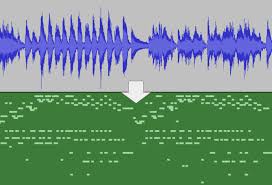
How Do Beginners Do Piano Transcriptions?
Once you have the melody and chords figured out, you can move onto transcribing the rhythm. The time signature will be at the top of the music and will tell you how many beats are in each measure and what type of notes are worth one beat. Usually, the time signature will be in common time (four beats per bar) or cut time (2/2).
One of Kempff’s beloved piano transcriptions is his rendition of Johann Sebastian Bach’s Chorale Prelude “Ich ruf zu dir, Herr Jesu Christ” (BWV 639). Known for his deep reverence for Bach’s music, Kempff’s transcription beautifully captures the essence of this sacred piece, infusing it with his signature expressive touch and lyrical phrasing. Through his sensitive interpretation, Kempff brings out the profound spirituality and emotional depth inherent in Bach’s composition, captivating listeners with its transcendent beauty.
Another standout transcription in Kempff’s repertoire is his interpretation of Franz Schubert’s “Ave Maria.” Originally composed as a song for voice and piano, Schubert’s “Ave Maria” is a timeless masterpiece cherished for its serene melody and poignant lyrics. Kempff’s piano transcription preserves the song’s ethereal quality while adding his own artistic flair, delicately weaving intricate harmonies and melodic lines to evoke a sense of sublime tranquility. His rendition of “Ave Maria” resonates with heartfelt emotion, offering a poignant meditation on faith and devotion.
Once you’ve finished transcribing the rhythm and chords, make sure to test them against the original recording. This will help you make sure that your transcription is accurate and that you’re playing the right notes at the right time. It’s also helpful to play along with the recording and experiment with how you can replicate some of the nuances of the performance, such as timing, vibrato, and articulation.